


Unmasking Your Robinhood Crypto Costs: Why the Price Tag Can Change!
You’ve eyed that perfect crypto on Robinhood, ready to hit “buy” or “sell,” only to see the final price come in a little differently than expected. Sound familiar? It’s a common head-scratcher for many crypto traders. While it might feel like Robinhood is tacking on extra charges, or that your sell order went through for far less, the reality lies in the intricate dance of live market prices and the protective mechanisms in place. Let’s break down why your Robinhood crypto order might seem to cost more, or sell for less, than the price you initially see.
The Mid-Price Mirage: What You See vs. What You Get
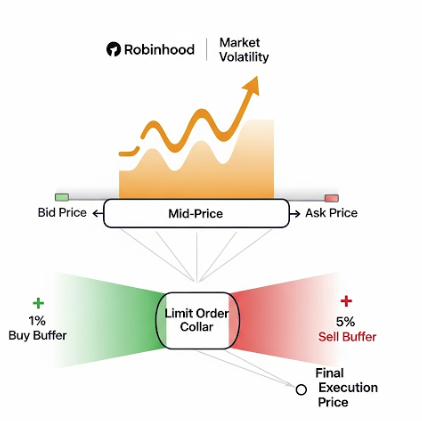
When you glance at a crypto chart on Robinhood, you’re typically seeing the mid-price. Think of this as the average, the happy medium between what buyers are willing to pay (the bid price) and what sellers are asking (the ask price) in the market at that moment. It’s a great quick reference, but it’s not the actual price you’ll trade at.
When you place a market order—meaning you want to buy or sell right now—Robinhood executes it at the best available price in the live market.
- Buying? You’ll pay the ask price, which is the lowest price a seller is currently willing to accept.
- Selling? You’ll get the bid price, which is the highest price a buyer is currently willing to offer.
Since the ask price is always a bit higher than the mid-price, and the bid price is always a bit lower, your final transaction price will naturally reflect either the ask or the bid, leading to a small difference from that displayed average. This is why a sell order might execute for less than the mid-price shown; you’re getting the best available bid.
The “Limit Order Collar”: Your Market Shield
Crypto markets are a wild ride, with prices swinging up and down at lightning speed. To shield you from getting blindsided by sudden, extreme price changes, Robinhood uses a smart feature called a “limit order collar.”
Here’s how this protective bubble works:




- For Buy Orders: Your order won’t go through if the price suddenly jumps more than 1% higher than the price when you initiated the order. This saves you from unknowingly buying at an unexpectedly inflated price.
- For Sell Orders: Conversely, if you’re selling, your order won’t execute if the price plummets more than 5% lower than your initial price. This prevents you from selling your crypto for significantly less than intended during a sharp, immediate market downturn.
While these collars are designed for your financial safety, they can lead to situations where your order doesn’t fill at the exact estimated price, or in rare cases, doesn’t fill at all if the market moves too rapidly outside these buffers. This can also explain why a sell order might seem to fill at a price far lower; if the market rapidly drops, your order might get filled at the lower end of that 5% buffer if it still qualifies for execution.
The Crypto Whirlwind: Market Volatility
Beyond Robinhood’s specific tools, the inherent volatility of cryptocurrencies is a massive factor. Prices can literally change in milliseconds, especially during peak trading hours or when major news breaks.
This means that even in the blink of an eye between you hitting “confirm” and Robinhood processing your order, the price on the exchange can shift. That initial estimate you saw is just that—an estimate—and the final execution price reflects the market’s reality at the exact moment your trade goes through.
Let’s look at an example:
Say the mid-price for a crypto is displayed at $10.00.
- If you’re buying, the actual ask price might be $10.10. Your order will be filled at $10.10.
- If you’re selling, the actual bid price might be $9.90. Your order will be filled at $9.90.
In both scenarios, your final price differs from the $10.00 you initially saw, not because of hidden fees, but because you’re interacting with a live, fluctuating market. If there’s a sudden sell-off, for instance, the bid price can drop sharply, causing your sell order to execute at a much lower price than what was briefly displayed just moments before.
So, the next time your Robinhood crypto order seems to cost a little “extra” or sells for a bit “less,” remember it’s usually the interplay of the dynamic market, the bid-ask spread, and Robinhood’s built-in protections ensuring you get a fair, safe trade. Understanding these elements can help you navigate the exciting world of crypto with more confidence! Sources






















come and join me at moomoo!Sign up via my referral link now and claim 8.1% APY and up to 15 free stocks!
account when you invite 3 or more friends to sign